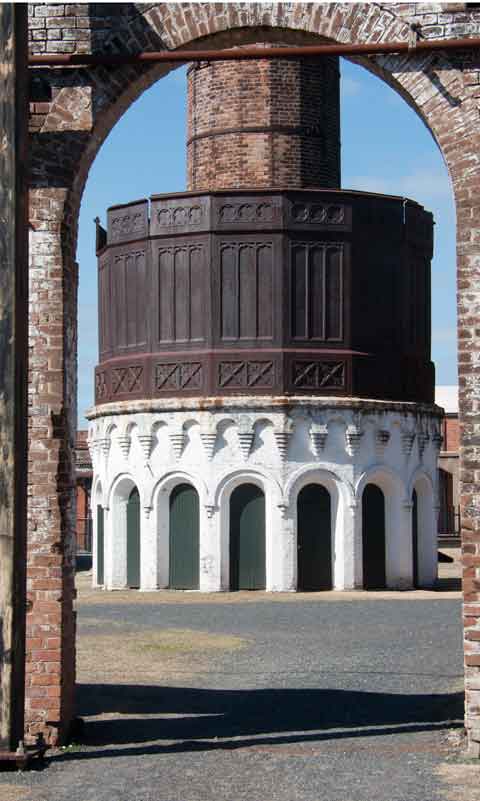
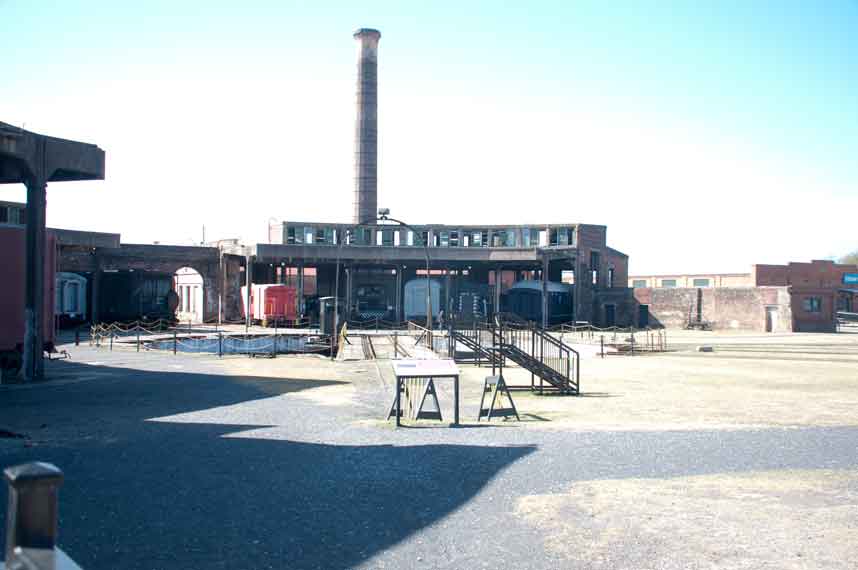
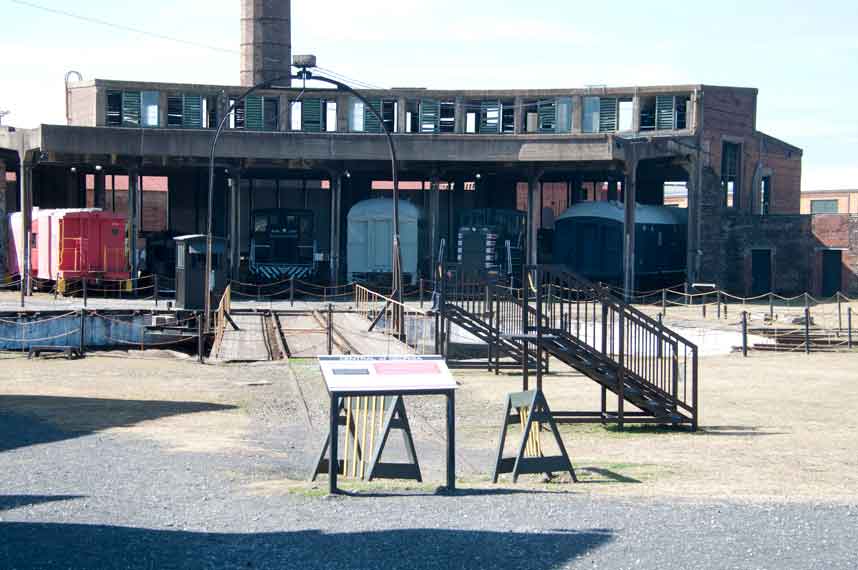
The buildings were first built in 1833 by the Central of Georgia Railroad and Canal Company. The yard is still mostly the same as it was when originally built, though part of the round house was removed. During the civil war, General Sherman of the US Army was given the task to stop the trains, which he accomplished by destroying engines and track. Many of the buildings were built by Slaves and there are still areas you can view their fingerprints on the bricks.
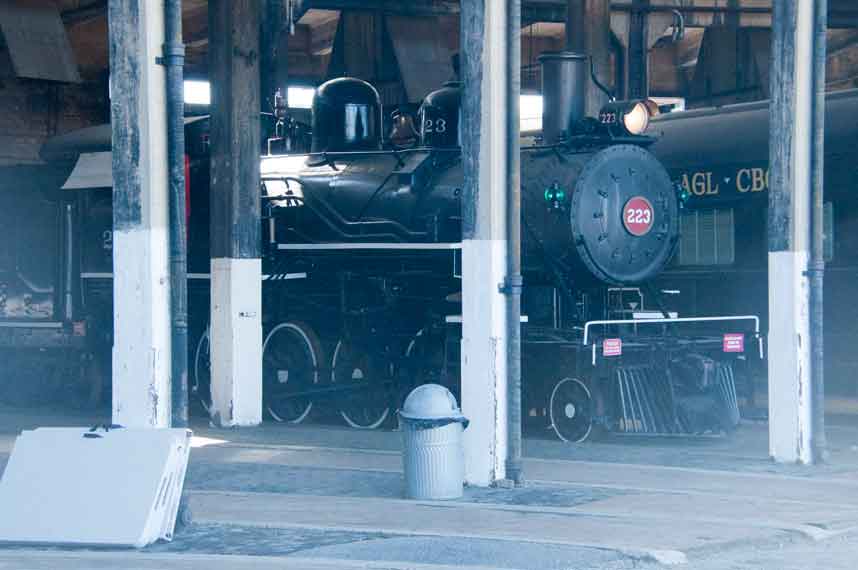
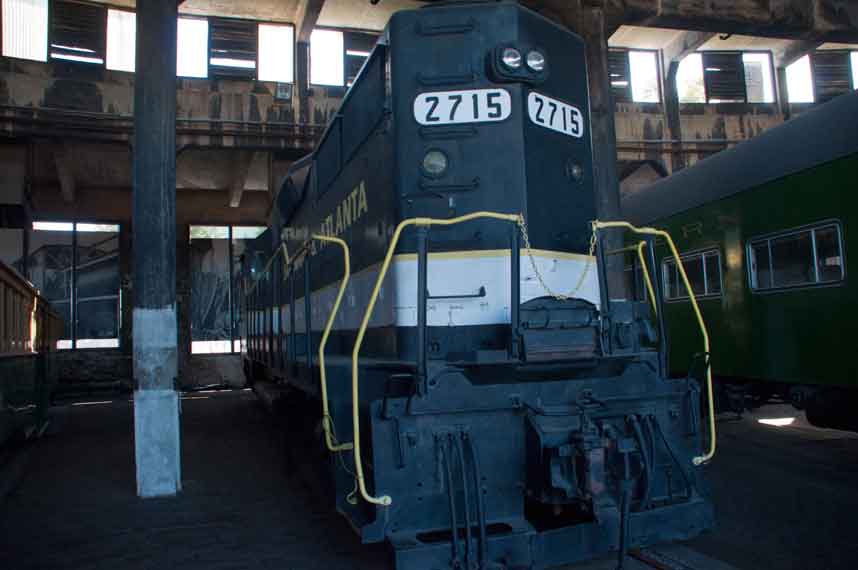
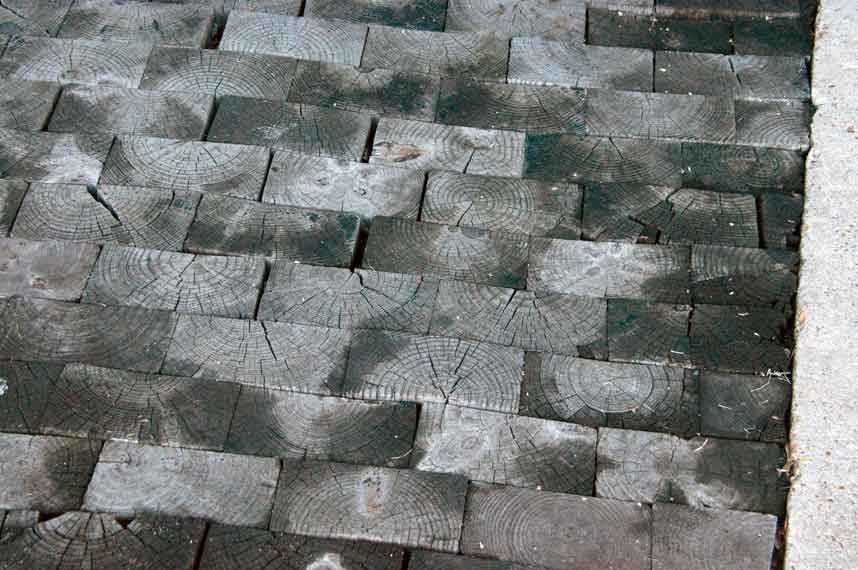
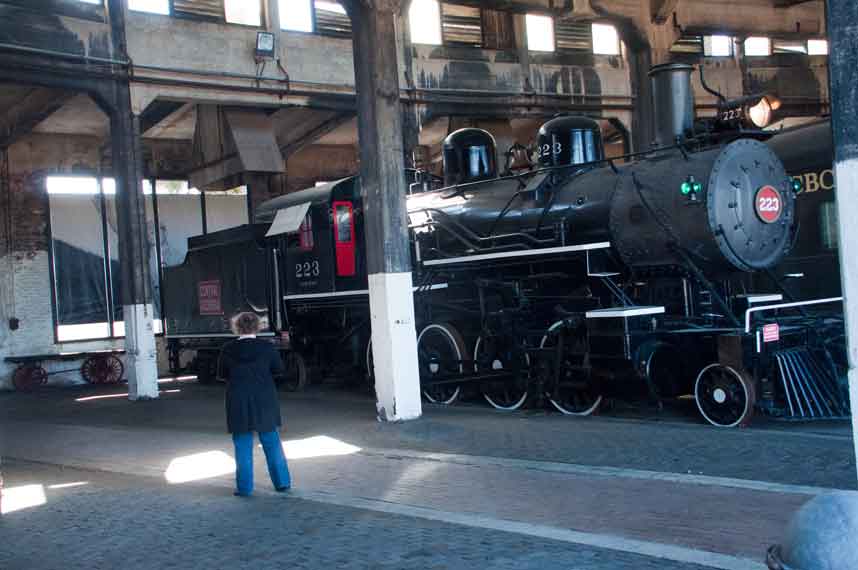
They still have a number of cars and engines. The original machine shop and paint shop are still there. There are several unique features still visible. The builders built underground tunnels to vent steam and smoke from the work areas to the main smoke stack. At the bottom of the smoke stack is a cistern which collected rain water which was heated by the hot smoke and used for employee showers at the bottom of the smoke stack. They used wood bricks in the round house rather then bricks or cement. Oil leaks and lubrication would sit on the bricks but would hit the wood and sink to underground pipes which routed the lubricants to lubricate the turn table. This is the largest facility of its kind in the world.
The museum receives no public funds. Admissions and donations run the program. The also have been a number of films shot at the facility including the 2019 Lady and the Tramp. and The Birth of a Nation.
Below is the large smoke stack.
Below, are the wood bricks which helped funnel lubricanr to the turn table.
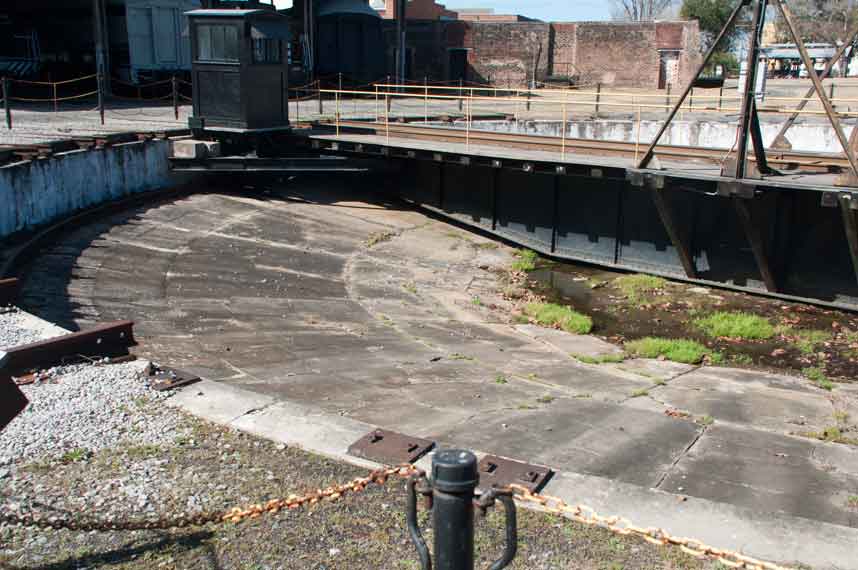
Below is the turn table which is so well balanced, one person can turn it with an engine on board by hand.
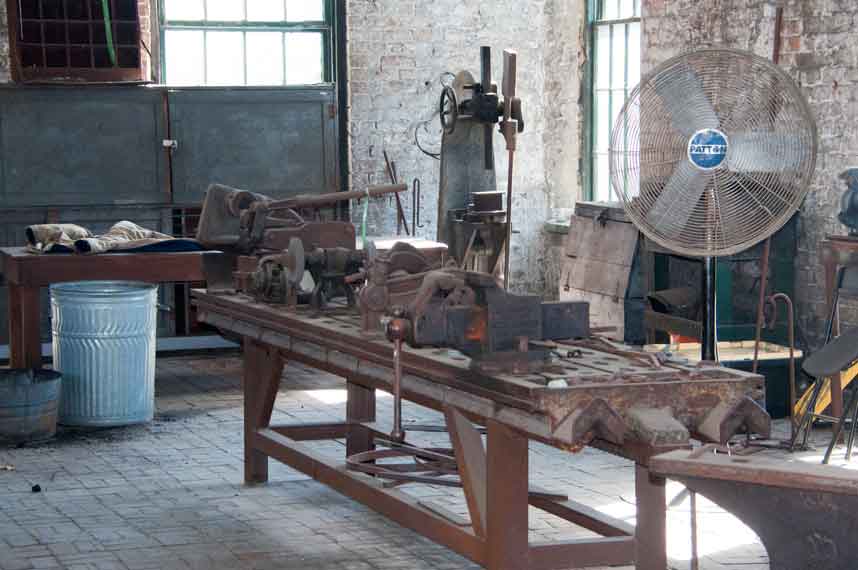
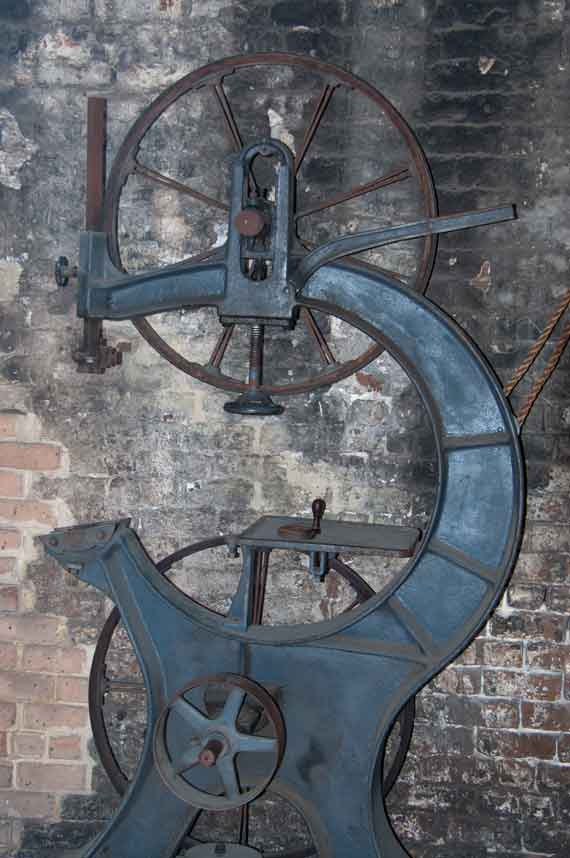
The next two pictures are the original machine shop tools with the exception of the fan.
The picture below is the cistern and on the bottom, the heated showers.